
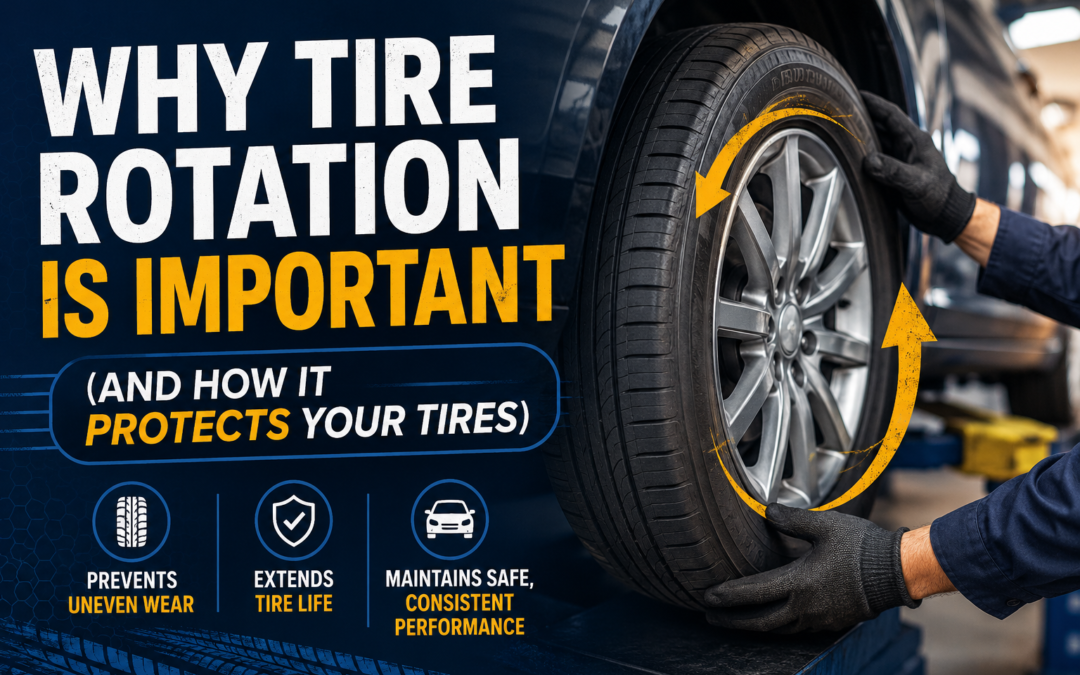
Your tires are constantly exposed to braking, acceleration, steering, cornering, and road friction. Since each wheel position experiences these forces differently, tires rarely wear at exactly the same rate. Regular tire rotation helps redistribute that wear, allowing your tires to maintain more consistent tread depth and performance over time.
Tire rotation is a relatively simple part of tire maintenance, but skipping it can contribute to uneven tread wear and reduce the usable life of your tires. NHTSA notes that regular rotation can help reduce irregular wear, extend tire life, and maintain tire efficiency.
This guide explains why tire rotation is important, how it protects your tires, how often you should rotate them, and what other tire services can help maintain safe and consistent vehicle performance.
What Is Tire Rotation?
| Tire rotation involves moving your vehicle’s tires from one wheel position to another according to the appropriate rotation pattern. |
The goal is to distribute normal tread wear more evenly across the set rather than allowing the tires in one position to wear significantly faster than the others.
The correct rotation pattern depends on factors such as your vehicle’s drivetrain, tire design, and tire sizes. Some vehicles may use a front-to-rear pattern, while others require a different arrangement. Directional tires, asymmetric tires, and vehicles with different front and rear tire sizes may have additional restrictions on how the tires can be moved.
Your owner’s manual and tire manufacturer’s recommendations should always take priority when determining the appropriate tire rotation service and rotation pattern.
Why Do Front and Rear Tires Wear Differently?
The tires on your vehicle don’t all experience the same amount or type of stress. Their position and the vehicle’s drivetrain can significantly influence how quickly the tread wears.
Front Tires Experience More Steering and Braking Forces
On many vehicles, the front tires handle a greater share of steering and braking forces. During cornering, they also experience additional lateral stress. These repeated forces can cause the front tires to wear faster than the rear tires.
Front-wheel-drive vehicles can experience even greater front-tire wear because the front tires are responsible for steering, braking forces, and transmitting engine power to the road.
Drive Tires Experience Additional Stress
The tires connected to the vehicle’s drive axle also experience additional forces from acceleration and power delivery. Michelin notes that tires on the drive axle generally wear faster because they handle the transmission of power and torque.
This is why tire rotation is an important part of routine tire maintenance. Moving the tires to different positions helps distribute these different stresses over the entire set.
Road Conditions and Driving Habits Matter
Your tires can also wear differently depending on where and how you drive. Frequent stop-and-go traffic, aggressive acceleration, hard braking, rough roads, and frequent cornering can all increase tire wear.
Even normal driving gradually creates differences in tread depth between the front and rear tires. Regular tire rotation helps manage those differences before they become significant.
Why Is Tire Rotation Important?
The main purpose of tire rotation is to promote more even tread wear across all four tires. When tire wear is more consistent, you can get more usable life from the set while maintaining predictable handling and traction.
Regular rotation can also help you identify developing problems. During a tire rotation service, a technician can inspect the tires for unusual tread patterns, damage, low tread depth, or other concerns that may require attention.
NHTSA recommends following the vehicle manufacturer’s instructions for rotation frequency and pattern. When rotation is recommended, it is commonly performed every 5,000 to 8,000 miles, or sooner if uneven wear develops.
Adding tire rotation Ventura service to a regular maintenance schedule can be a practical way to monitor tire condition while helping maximize the life and performance of your tires.
Regular tire rotation works best as part of a broader maintenance routine that includes proper inflation, tread inspections, wheel alignment, and balancing. These services address different aspects of tire performance, but together they help keep your tires working as intended.
7 Benefits of Regular Tire Rotation
Regular tire rotation does more than move your tires from one wheel position to another. It helps manage normal tread wear, supports consistent handling, and can help you get more usable miles from a set of tires. Since different wheels experience different amounts of steering, braking, acceleration, and cornering stress, rotating them at the recommended intervals helps distribute that wear more evenly.
1. Reduces Uneven Tread Wear
Uneven tread wear is one of the main reasons tire rotation matters. Front tires often experience greater stress because they handle steering and, on many vehicles, transmit engine power to the road. Without regular rotation, the tread on these tires can wear faster than the rear tires.
Moving the tires between positions helps distribute normal wear across the entire set. This can result in more consistent tread depth and reduce the likelihood of one or two tires wearing out significantly sooner than the others.
2. Helps Maximize Tire Lifespan
Replacing a complete set of tires can be a significant expense. Regular tire rotation service can help you get more value from the tires you already have by promoting more even tread wear.
When all four tires wear at a similar rate, you may be able to use more of the available tread before replacement becomes necessary. Tire rotation cannot prevent normal tire aging or damage, but it can help reduce premature wear caused by differences in wheel position.
3. Supports Better Handling
Your tires are responsible for maintaining contact with the road, so differences in tread depth can affect how your vehicle responds to steering and braking inputs.
Consistent tire wear helps maintain more predictable handling, particularly during cornering, acceleration, and braking. This makes tire maintenance an important part of keeping your vehicle responsive on everyday drives.
4. Helps Maintain Consistent Traction
Tread depth affects how effectively tires grip the road. When one axle has significantly more worn tires than the other, the vehicle may not have the same level of traction across all four wheels.
Regular tire rotation helps keep tread wear more consistent, which can support predictable traction in both dry and wet driving conditions.
5. Can Improve Driving Comfort
Uneven tire wear can sometimes contribute to increased road noise, vibrations, or a less comfortable ride. Rotating tires regularly can help minimize irregular wear patterns before they become more pronounced.
If your vehicle continues to vibrate even after a rotation, the issue may be related to wheel balancing, alignment, tire damage, or another mechanical problem. A professional tire service can help determine the cause.
6. Helps Identify Developing Tire Problems
A tire rotation service is also an opportunity to inspect your tires more closely. A technician can look for problems that may otherwise go unnoticed, including:
- Uneven tread wear
- Low tread depth
- Cracks or cuts
- Bulges or other sidewall damage
- Irregular wear patterns
- Embedded objects
Uneven wear can sometimes indicate an issue beyond the tires themselves. Problems with tire pressure, suspension components, or wheel alignment can contribute to abnormal wear, so identifying these patterns early can prevent further damage.
7. Can Reduce Long-Term Tire Costs
Regular rotation may help you avoid replacing tires prematurely due to uneven wear. It also gives you an opportunity to catch developing tire problems before they require more extensive attention.
For drivers who want to control vehicle ownership costs, routine tire maintenance is a relatively simple way to protect an important investment. It can also be incorporated into regular auto maintenance appointments instead of being treated as a separate task.
How Tire Rotation Works With Other Tire Services
Tire rotation is only one part of proper tire care. Other services address different problems, and knowing the difference can help you determine what your vehicle actually needs.
Tire Rotation vs. Tire Balancing
Tire rotation changes the position of the tires on your vehicle to help distribute tread wear.
Tire balancing corrects uneven weight distribution between a tire and wheel assembly. An imbalance can cause vibrations, particularly at certain speeds.
The two services serve different purposes, but both can contribute to smoother and more consistent tire performance.
Tire Rotation vs. Wheel Alignment
Tire rotation helps distribute normal wear between different wheel positions.
Vehicle alignment adjusts the angles of the wheels so they meet the road correctly. Poor alignment can cause issues such as pulling, steering problems, and uneven or accelerated tire wear.
If you notice unusual tread wear even though you’re keeping up with tire rotation, an alignment inspection may be appropriate. Our blog, 10 Signs Your Car Needs a Wheel Alignment Right Now, covers the warning signs that can indicate an alignment problem.
Drivers who notice excessive tread wear, cracks, low tread, or other damage should also review How to Know When It’s Time for New Tires to determine when replacement may be necessary.
Regular tire rotation, proper inflation, wheel balancing, and vehicle alignment work together as part of a complete tire maintenance routine. Taking care of these areas can help your tires perform consistently and give you greater confidence behind the wheel.
When and How Often Should You Rotate Your Tires?
Knowing how often to rotate tires is just as important as understanding why rotation matters. Waiting until you notice severe tread wear defeats much of the purpose of preventive tire maintenance. Following a consistent rotation schedule allows you to address normal wear before it becomes uneven or excessive.
Factors That Can Affect Tire Rotation Frequency
Your vehicle and driving habits can influence how quickly your tires wear.
- Driving Habits
Frequent hard braking, rapid acceleration, sharp cornering, and stop-and-go driving can increase tread wear. Drivers with these habits may need to pay closer attention to their tire rotation schedule.
- Vehicle Drivetrain
Front-wheel-drive vehicles often place more stress on the front tires because they handle steering and transmit engine power. Rear-wheel-drive vehicles distribute these forces differently, while all-wheel-drive vehicles can have specific rotation requirements.
- Road Conditions
Driving regularly on rough, uneven, or poorly maintained roads can accelerate tire wear. Potholes and road debris can also cause damage that requires an inspection.
- Tire Type and Configuration
Not every tire can be rotated in the same pattern. Directional tires, staggered tire sizes, and certain performance tire configurations may restrict which tires can be moved between positions.
Always follow the recommended rotation pattern for your specific vehicle and tires.
Signs Your Tires May Need Rotation
You don’t always have to wait for a scheduled maintenance appointment to determine if your tires need attention. Certain changes in tread wear or vehicle behavior can indicate that it’s time for a tire rotation service in Ventura.
Uneven Tread Wear
Check the tread across all four tires. If the front tires appear significantly more worn than the rear tires, or if one tire is wearing differently from the others, your tires may be due for rotation.
Uneven wear can also point to other issues, including incorrect tire pressure, alignment problems, suspension wear, or improper wheel balance.
Noticeably Different Tread Depths
Tires on the same vehicle should generally have reasonably consistent tread wear. A significant difference in tread depth between the front and rear tires can affect handling and traction.
Regular tire rotation helps prevent these differences from becoming excessive by distributing normal wear between wheel positions.
Increased Road Noise
A change in road noise may sometimes result from irregular tread wear. If your vehicle becomes noticeably louder as you drive, inspect the tires rather than assuming the noise is simply caused by the road surface.
Steering Feels Different
Changes in steering response can have several causes, including tire wear, incorrect tire pressure, alignment problems, and suspension issues.
If your vehicle begins pulling to one side or the steering wheel feels different, don’t rely on tire rotation alone. A professional inspection can determine whether you also need vehicle alignment or another repair.
Your Scheduled Rotation Is Due
Sometimes there are no obvious warning signs. That’s why following the recommended tire rotation schedule remains important.
Regular maintenance allows technicians to monitor tread depth and wear patterns before they become noticeable to the driver.
What Happens If You Don’t Rotate Your Tires?
Skipping tire rotations doesn’t necessarily cause immediate problems, but uneven wear can gradually reduce the performance and usable life of your tires.
Potential consequences include:
- Faster wear on specific tires
- Uneven tread patterns
- Reduced tire lifespan
- Less consistent handling
- Changes in ride comfort
- Earlier tire replacement
- Increased likelihood of additional tire problems
In some cases, excessive uneven wear can make a tire unsafe before the rest of the set reaches the end of its usable life. That means you may have to replace individual tires earlier than expected, rather than getting the most practical use from the complete set.
Regular tire rotation Ventura service can help local drivers stay ahead of these issues. During a rotation, technicians can also inspect the tires for abnormal wear, damage, or other concerns that may require attention.
If you haven’t had your tires rotated recently, check your vehicle’s maintenance schedule or have your tires professionally inspected. A simple rotation can be an important step toward protecting your tires, maintaining consistent performance, and avoiding premature replacement.
Getting More Life From Your Tires
Regular tire rotation is an important part of tire care, but it’s not the only thing you can do to protect your tires. Proper inflation, routine inspections, correct wheel alignment, and timely replacement all contribute to longer tire life and more consistent performance.
Check Tire Pressure Regularly
Incorrect tire pressure can accelerate tread wear and affect handling, braking, and fuel efficiency. Check your tire pressure regularly, ideally when the tires are cold, and use the pressure recommended by your vehicle manufacturer.
Don’t rely on the number printed on the tire sidewall. That figure represents the tire’s maximum pressure, not necessarily the correct pressure for your vehicle.
Check Tread Depth
Regularly inspect your tires for adequate tread depth and signs of uneven wear. Pay attention to differences between the front and rear tires, as well as wear concentrated on the inner or outer edges.
If you notice significant wear differences, schedule a tire rotation service and have the tires inspected to determine whether another issue is contributing to the wear.
Watch for Uneven Wear
Uneven tread wear can be caused by several factors, including:
- Incorrect tire pressure
- Lack of tire rotation
- Poor wheel alignment
- Worn suspension components
- Wheel imbalance
Don’t assume that rotating the tires will correct every type of uneven wear. If the pattern continues after rotation, professional diagnosis can help identify the underlying cause.
Keep Your Wheels Properly Aligned
Correct wheel alignment helps your tires maintain proper contact with the road. Misalignment can cause rapid or uneven tread wear, pulling, an off-center steering wheel, and changes in handling.
If you notice these symptoms, scheduling vehicle alignment service can help protect your tires and restore proper handling. Regular alignment checks are especially useful after hitting a significant pothole or curb.
Don’t Ignore Vibrations or Pulling
A vibrating steering wheel or vehicle that pulls to one side shouldn’t be ignored. These symptoms can result from tire imbalance, alignment problems, tire damage, or suspension issues.
A professional tire service can inspect the tires and wheels to determine the cause. Addressing the problem early can prevent additional wear and help maintain a smoother, safer ride.
Schedule Routine Tire Inspections
A professional tire inspection provides an opportunity to check tread depth, inflation, wear patterns, sidewalls, and overall tire condition.
Combining routine inspections with tire rotation, balancing, and alignment can help you identify problems before they affect tire performance or require premature replacement.
Tire Rotation and Maintenance Checklist
Use this quick checklist to stay on top of your tire care:
| Maintenance Task | What to Check |
| Tire rotation | Follow the vehicle manufacturer’s recommended interval |
| Tire pressure | Maintain the pressure specified by the vehicle manufacturer |
| Tread depth | Look for adequate and consistent tread |
| Wear patterns | Watch for uneven or accelerated wear |
| Wheel alignment | Check for pulling, an off-center steering wheel, or uneven wear |
| Tire condition | Inspect for cracks, cuts, bulges, or other damage |
| Wheel balancing | Address persistent vibrations or steering-wheel shake |
| Professional inspection | Have tires checked when you notice unusual changes |
Protect Your Tires With Regular Maintenance
Tire rotation is a simple maintenance service that can help distribute tread wear, extend usable tire life, and maintain consistent handling and traction. However, rotation works best when combined with proper tire pressure, regular inspections, wheel balancing, and alignment.
At Advanced Auto Care & Smog, our Auto Tires, Vehicle Alignment, and Auto Maintenance services help Ventura drivers keep their tires and vehicles performing reliably. If your tires are due for rotation or you’re noticing uneven wear, vibrations, or other changes in handling, our team can inspect your tires and recommend the appropriate service.
Schedule your tire rotation with Advanced Auto Care & Smog today and take a simple step toward getting more life from your tires.
Frequently Asked Questions
1. Why is tire rotation important?
Tire rotation helps distribute normal tread wear across the tires, which can promote more even wear, support consistent handling, and help maximize the usable life of your tires.
2. How often should you rotate your tires?
A common guideline is every 5,000 to 8,000 miles, but the recommended interval varies by vehicle and tire type. Always follow your vehicle manufacturer’s maintenance schedule.
3. Does tire rotation extend tire life?
Regular rotation can help extend usable tire life by reducing uneven wear. It cannot prevent normal aging, damage, or wear caused by improper inflation or alignment problems.
4. What happens if you don’t rotate your tires?
Your tires may develop uneven tread wear, with some wearing significantly faster than others. This can shorten tire life and may affect handling, traction, and ride comfort.
5. Can tire rotation fix uneven tire wear?
Rotation can help manage normal uneven wear caused by different wheel positions, but it won’t correct the underlying cause of abnormal wear. Alignment, tire pressure, balancing, or suspension issues may also need to be addressed.
6. Is tire rotation the same as tire balancing?
No. Tire rotation changes the position of the tires on your vehicle, while balancing corrects uneven weight distribution between the tire and wheel assembly. Both are different forms of tire maintenance.
7. Do all four tires need to be rotated?
For vehicles with four tires that can be rotated according to the manufacturer’s specifications, all four are generally included in the rotation. However, directional tires, staggered setups, and certain specialty configurations may have specific requirements.
8. Can I rotate my tires myself?
Some vehicle owners can rotate their tires themselves with the appropriate equipment and knowledge. However, professional service can also include a tire inspection that identifies uneven wear, damage, or other issues while the tires are being rotated.
9. Should I get a wheel alignment when rotating my tires?
Not necessarily. Rotation and alignment address different issues. An alignment inspection may be recommended if you notice uneven tread wear, pulling, an off-center steering wheel, or other handling changes.
10. Where can I get tire rotation service in Ventura?
Advanced Auto Care & Smog provides tire rotation Ventura services along with tire inspections, Auto Tires, Vehicle Alignment, and other maintenance services to help keep your vehicle road-ready.