
Your vehicle’s wheels need to point and track in the right direction to provide stable handling, even tire wear, and a comfortable driving experience. When alignment angles are off, you may notice symptoms such as pulling to one side, an off-center steering wheel, or tires wearing unevenly.
Confused about Two-Wheel Alignment vs. Four-Wheel Alignment? Getting the right type of wheel alignment can help correct these issues before they lead to more expensive tire or suspension problems.
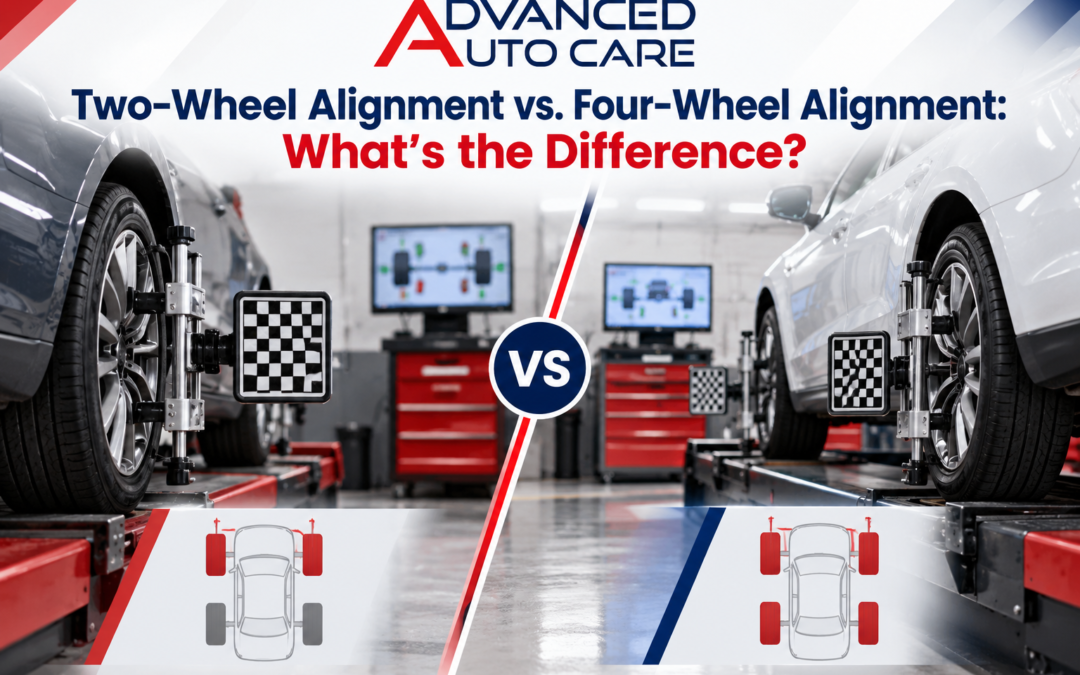
But not every vehicle needs the same type of alignment. The difference between a two-wheel alignment vs. four-wheel alignment comes down to how many wheels are adjusted and how the vehicle’s suspension is designed. While a two-wheel alignment primarily focuses on the front wheels, a four-wheel alignment evaluates and adjusts alignment angles at all four wheels when the vehicle allows for it.
What Is a Wheel Alignment?
A wheel alignment is a service that adjusts the angles of the wheels according to the vehicle manufacturer’s specifications. Technicians typically evaluate three primary alignment angles: camber, caster, and toe. These angles affect how the tires contact the road and how the vehicle responds when you steer.
When these angles are out of specification, your vehicle may not drive as it should. Misalignment can contribute to uneven or accelerated tire wear, steering problems, reduced handling, and a vehicle that drifts or pulls while driving.
Alignment problems can develop for several reasons, including hitting potholes or curbs, driving over rough roads, or worn suspension components. An alignment may also be recommended after certain suspension repairs or when installing new tires, depending on the vehicle and its condition.
Two-Wheel vs. Four-Wheel Alignment: The Basic Difference
The simplest way to understand the difference is to look at which wheels are adjusted.
A two-wheel alignment generally focuses on the vehicle’s front wheels. It is sometimes called a front-end alignment because the technician adjusts the alignment angles that can be changed at the front of the vehicle.
A four-wheel alignment involves checking the alignment of all four wheels and making adjustments where the vehicle’s design allows. This is particularly important for vehicles with adjustable rear alignment angles or independent rear suspension.
However, choosing between a two-wheel alignment and a four-wheel alignment isn’t simply a matter of picking the more comprehensive service. The correct procedure depends on the vehicle’s suspension design and manufacturer specifications.
Two-Wheel Alignment: What Is It?
A two-wheel alignment focuses primarily on the vehicle’s front wheels. It is often referred to as a front-end alignment because the technician checks and adjusts the alignment angles at the front axle according to the vehicle manufacturer’s specifications.
This type of alignment may be appropriate for vehicles with a solid rear axle or a rear suspension design that does not have adjustable alignment angles.
What Does a Two-Wheel Alignment Adjust?
Depending on the vehicle, a technician may check and adjust:
- Toe: The direction the tires point when viewed from above.
- Camber: The inward or outward tilt of the wheel when viewed from the front.
- Caster: The angle of the steering axis that helps affect steering stability and return.
Not every vehicle allows all three angles to be adjusted. The available adjustments depend on the vehicle’s suspension design.
When Might You Need a Two-Wheel Alignment?
A two-wheel alignment may be recommended when:
- The front tires are wearing unevenly.
- Your steering wheel is off-center.
- The vehicle pulls or drifts while driving.
- You recently hit a pothole or curb.
- Front suspension or steering components were repaired or replaced.
- Your vehicle’s manufacturer specifies a front-end alignment.
For example, if your car starts pulling to one side after hitting a large pothole in Ventura, an alignment inspection can determine whether the impact affected the front-wheel alignment.
Limitations of a Two-Wheel Alignment
One important point when comparing two-wheel alignment vs. four-wheel alignment is that a two-wheel service does not necessarily mean the rear wheels are ignored completely.
A technician may still inspect the rear wheels and measure their position relative to the vehicle. However, if the rear alignment angles are adjustable and outside specification, a two-wheel alignment may not be enough to correct the underlying problem.
This is one reason it is important to choose an alignment service based on your vehicle’s specifications rather than simply requesting the least expensive option.
Does Your Car Need a Two-Wheel Alignment?
It depends on the vehicle.
Some cars are designed so that a front-end alignment is appropriate, while others require all four wheels to be checked and potentially adjusted. Your vehicle’s suspension configuration, manufacturer specifications, and current symptoms all help determine the correct approach.
If you’re experiencing uneven tire wear or steering issues, having the vehicle inspected can help identify whether a two-wheel alignment or a four-wheel vehicle alignment is more appropriate.
What Is Four-Wheel Alignment?
A four-wheel alignment checks the alignment angles of all four wheels and adjusts them where the vehicle’s design allows. Unlike a front-end alignment, this service takes the rear wheels into account when determining how the entire vehicle tracks down the road.
This can be especially important on vehicles with independent rear suspension or adjustable rear alignment angles.
What Happens During a Four-Wheel Alignment?
A technician typically:
- Measures all four wheels using alignment equipment.
- Checks the vehicle against manufacturer specifications.
- Evaluates the rear-wheel angles and how they relate to the front wheels.
- Adjusts the available alignment angles as needed.
- Verifies the final measurements to make sure the vehicle is within specification.
The goal isn’t simply to make each wheel point straight ahead. The wheels need to work together so the vehicle tracks properly and the tires maintain appropriate contact with the road.
Why Does Rear-Wheel Alignment Matter?
The rear wheels help determine how your vehicle follows the road. If the rear alignment is off, the vehicle can develop unusual handling characteristics or uneven tire wear.
One issue technicians may look for is thrust angle, which describes the direction the rear wheels effectively push the vehicle. If this angle is incorrect, the vehicle may not track straight even when the front wheels appear properly aligned.
A four-wheel alignment can help identify these issues and correct adjustable rear alignment angles when necessary.
Two-Wheel Alignment vs. Four-Wheel Alignment: Key Differences
When comparing two-wheel alignment vs. four-wheel alignment, the main differences are the wheels evaluated, the suspension design involved, and the adjustments available.
| Feature | Two-Wheel Alignment | Four-Wheel Alignment |
| Primary focus | Front wheels | All four wheels |
| Rear wheels | May be measured but generally not adjusted | Checked and adjusted when possible |
| Common use | Vehicles with non-adjustable rear suspension | Vehicles with adjustable rear alignment |
| Main benefit | Corrects front alignment issues | Addresses alignment across the entire vehicle |
| Best choice | When specified by the vehicle manufacturer | When rear alignment requires attention |
Neither option is automatically better.
The correct service depends on your vehicle. Some vehicles are designed for a two-wheel alignment, while others require a four-wheel alignment to properly address their suspension geometry.
For example, choosing a four-wheel alignment in Ventura simply because it sounds more comprehensive doesn’t necessarily make it the right service for a vehicle with a non-adjustable rear axle. Likewise, performing only a front-end alignment on a vehicle with adjustable rear alignment angles may leave an important problem unaddressed.
That’s why alignment measurements and manufacturer specifications should guide the decision.
Which Alignment Does Your Vehicle Need?
When deciding between a two-wheel alignment vs. four-wheel alignment, there isn’t one option that is right for every vehicle. The correct service depends on the vehicle’s suspension design, manufacturer specifications, and the condition of its wheels and suspension components.
A professional inspection can determine which alignment procedure is appropriate rather than relying on symptoms alone.
When a Two-Wheel Alignment May Be Appropriate
A two-wheel alignment may be suitable when your vehicle has a rear suspension that doesn’t provide adjustable alignment angles and the front wheels are out of specification.
You may want to have the vehicle alignment checked if you notice:
- Uneven front tire wear
- Your car pulling to one side
- An off-center steering wheel
- Steering that feels less stable than usual
- Alignment issues after hitting a pothole or curb
When a Four-Wheel Alignment May Be Needed
A four-wheel alignment may be recommended when the vehicle has adjustable rear alignment angles or when measurements indicate that the rear wheels aren’t properly aligned.
It’s particularly worth having the alignment checked after:
- Replacing suspension or steering components
- A significant pothole or curb impact
- Noticing unusual wear on multiple tires
- Changes in steering or handling
- Installing new tires when an alignment issue is suspected
If you’re experiencing these symptoms, learning about the signs of alignment problems can help you recognize when an inspection may be worthwhile.
How to Choose the Right Alignment
Rather than choosing an alignment based solely on price or the number of wheels involved, consider these three factors:
- Your vehicle’s design
The suspension determines which alignment angles can be adjusted. - Manufacturer specifications
Alignment should be performed according to the specifications established for your particular vehicle. - Current vehicle condition
Uneven tire wear, steering concerns, pothole impacts, or suspension repairs may indicate that a more comprehensive inspection is necessary.
For Ventura drivers, having your vehicle checked by a qualified technician can help identify alignment problems before they contribute to premature tire wear or handling concerns.
Two-Wheel Alignment vs. Four-Wheel Alignment FAQs
Is a four-wheel alignment better than a two-wheel alignment?
Not necessarily. The right option depends on your vehicle’s suspension design and manufacturer specifications. A four-wheel alignment is not automatically better for every car.
How often should I get a wheel alignment?
There isn’t a universal mileage interval for every vehicle. An alignment should be checked when you notice symptoms such as pulling, uneven tire wear, or an off-center steering wheel, as well as after significant impacts or certain suspension repairs.
Can a two-wheel alignment fix uneven tire wear?
It can correct front-wheel alignment problems that contribute to uneven wear. However, if the cause involves the rear wheels, suspension components, tire condition, or another issue, a front-end alignment alone may not resolve it.
Do new tires need an alignment?
New tires don’t automatically require an alignment, but checking alignment can be worthwhile if the old tires showed uneven wear or the vehicle has steering or handling symptoms. Correct alignment can help your new tires wear properly.
Can hitting a pothole affect wheel alignment?
Yes. A significant pothole or curb impact can affect alignment angles and may also damage suspension or steering components. If your vehicle pulls, the steering wheel is off-center, or tire wear changes after an impact, have it inspected.
How long does a wheel alignment take?
The time varies depending on the vehicle, the type of alignment required, and whether additional problems are discovered. A technician can provide a more accurate estimate after inspecting the vehicle.
Get the Right Wheel Alignment in Ventura
The difference between a two-wheel alignment vs. four-wheel alignment comes down to more than simply adjusting two or four wheels. Your vehicle’s suspension design and manufacturer specifications determine which procedure is appropriate.
If your car is pulling, your steering wheel isn’t centered, or your tires are wearing unevenly, consider having the alignment checked. Advanced Auto Care & Smog in Ventura can inspect your vehicle and determine what type of alignment service it needs.