
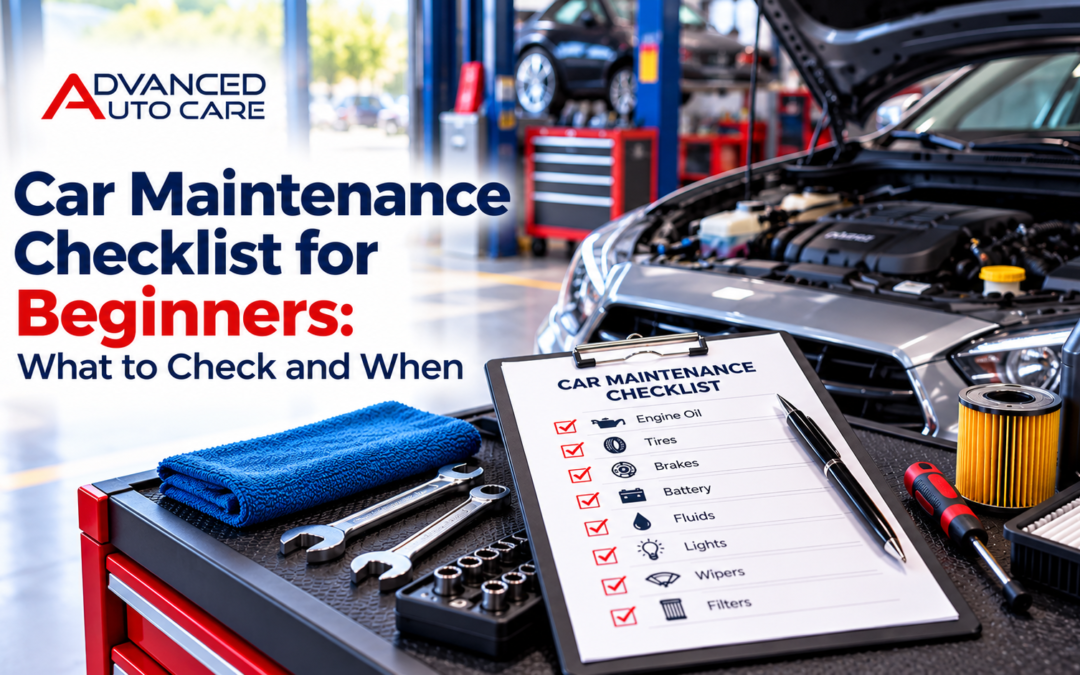
Taking care of a car can feel overwhelming when you’re new to vehicle ownership. There are fluids to monitor, tires to inspect, warning lights to understand, and maintenance schedules to follow. Skipping these checks can allow minor issues to develop into expensive repairs.
Did you know that one in four U.S. drivers is behind on recommended vehicle maintenance? California is among the states where roughly one in four drivers have fallen behind. This highlights why keeping track of routine inspections and manufacturer-recommended maintenance matters.
A car maintenance checklist makes these responsibilities easier to manage. It helps you understand which parts need regular attention, how often to inspect them, and when professional help is necessary.
You don’t need advanced mechanical knowledge to handle several basic checks. A little attention each month can help you spot early signs of wear, maintain reliable vehicle performance, and make informed decisions about repairs.
Why Is Regular Car Maintenance Important?
Your car contains several systems that work together to keep it running safely and efficiently. Engine components need proper lubrication, tires require the correct pressure, and brakes must respond consistently when you slow down. Regular inspections help you monitor these systems and identify problems before they become more serious.
Here are some benefits of keeping up with maintenance:
- Improved vehicle safety: Checking tires, brakes, lights, and other components helps identify problems that could affect your ability to drive safely.
- Fewer unexpected repairs: Early attention to leaks, unusual noises, and worn components can prevent some minor issues from developing into larger repairs.
- Better engine performance: Proper oil levels, clean filters, and suitable fluids help your engine operate as intended.
- Improved fuel efficiency: Correct tire pressure and timely maintenance can help reduce unnecessary fuel consumption.
- Longer component life: Regular inspections and scheduled replacements help reduce avoidable wear on important vehicle parts.
Following a car maintenance checklist also helps you keep track of completed inspections and upcoming maintenance. This makes it easier to plan expenses and avoid overlooking routine tasks.
What Should Beginners Know Before Maintaining a Car?
Start by reading your vehicle’s owner’s manual. It contains manufacturer recommendations for oil changes, fluid specifications, tire pressure, inspections, and replacement intervals. These instructions are more reliable than following a generic schedule that may not match your vehicle.
You should also keep a few basic items available:
- Tire pressure gauge
- Clean cloth or paper towels
- Flashlight
- Jumper cables
- Vehicle owner’s manual
- Tire inflator or access to one
Some checks are simple enough to perform at home, such as inspecting tire pressure, testing lights, and checking accessible fluid levels. Other tasks, including brake repairs, electrical diagnosis, and suspension work, require appropriate equipment and mechanical knowledge.
A good approach to car maintenance for beginners is to start with simple visual checks and gradually become familiar with your vehicle’s maintenance requirements.
Your Essential Car Maintenance Checklist
The following checks cover several areas that deserve regular attention. Use them to understand what to inspect and recognize signs that something may need professional attention.
1. Check Engine Oil
Engine oil lubricates moving components, reduces friction, and helps manage heat inside the engine. Low or deteriorated oil can increase wear and affect engine performance.
Most vehicles have a dipstick that allows you to check the oil level. Follow the instructions in your owner’s manual, as the correct procedure can vary by vehicle.
What to check:
- Park on level ground and switch off the engine.
- Allow the engine to cool or wait for the period specified by the manufacturer.
- Remove the dipstick, wipe it clean, and insert it again.
- Remove it once more and check the oil level against the marked range.
- Look for unusual discoloration or signs of contamination.
If the oil level is low, add the manufacturer-recommended oil in small amounts and recheck the level. Avoid overfilling the engine.
Also, follow the recommended oil and filter replacement intervals. The correct timing depends on your vehicle, mileage, driving conditions, and oil specifications.
2. Inspect Tire Pressure and Tread
Tires affect steering, braking, handling, and fuel consumption. Underinflated or overinflated tires can cause uneven wear and reduce vehicle stability.
Check tire pressure at least once a month and before long trips. Use a pressure gauge when the tires are cold, and compare the reading with the recommended pressure listed on the driver’s door-jamb label or in the owner’s manual.
Pay attention to these signs:
- Tread wear that appears uneven across the tire
- Cracks, cuts, or bulges on the sidewall
- Nails or other objects embedded in the tread
- Frequent pressure loss
- Tread depth approaching the legal or manufacturer-recommended limit
Don’t forget to check the spare tire if your vehicle has one. Proper inflation and timely inspections can help prevent tire-related problems.
You can also learn about the benefits of regular tire rotation to understand how rotating tires helps manage uneven wear.
3. Check Coolant Levels
Coolant, also called antifreeze, helps regulate engine temperature. It circulates through the cooling system, carrying heat away from the engine and helping prevent overheating.
Most vehicles have a coolant reservoir with minimum and maximum markings. Check the level only when the engine is completely cool.
Look for:
- Coolant below the minimum marking
- Visible leaks beneath the vehicle
- Cracks or damage around accessible hoses
- Frequent drops in coolant level
- Engine temperature rising above its normal range
Never remove the radiator cap or open a pressurized cooling system while the engine is hot. Hot coolant can cause serious burns.
Repeated coolant loss or overheating requires professional inspection. Simply adding more coolant may temporarily restore the level without addressing the underlying problem.
4. Inspect Brake Performance
Your braking system needs to respond reliably every time you slow down. Worn brake pads, damaged rotors, leaking components, and other faults can affect stopping performance.
You can monitor brake behaviour during normal driving without removing any components.
Watch for:
- Squealing or grinding noises
- Vibration when pressing the brake pedal
- A soft or unusually firm brake pedal
- The vehicle pulling to one side
- Longer stopping distances
- A brake warning light on the dashboard
These symptoms may indicate a problem that needs attention. Avoid attempting brake repairs without the necessary experience and equipment.
If you notice changes in braking performance, arrange a professional inspection rather than waiting for the next scheduled service.
5. Check Battery Condition
The battery supplies the electrical power needed to start your vehicle and operate various systems. A weak or failing battery can cause starting difficulties and electrical problems.
Look for visible corrosion around the battery terminals, loose connections, or signs of physical damage. Also, pay attention to how the vehicle starts.
Common signs of battery trouble include:
- Slow engine cranking
- Dim headlights or interior lights
- Electrical accessories behaving inconsistently
- Clicking sounds when starting the vehicle
- A battery warning light
Battery life varies based on driving habits, climate, vehicle usage, and battery type. If you notice repeated starting problems, have the battery and charging system tested.
6. Inspect Lights and Signals
Working lights help you see the road and make your vehicle visible to other drivers. Faulty lights can also create safety concerns, particularly during nighttime driving or poor weather.
Check these lights regularly:
- Headlights and high beams
- Tail lights
- Brake lights
- Turn signals
- Hazard lights
- Reverse lights
- License plate lights
Ask someone to help you check the brake lights and reverse lights if you cannot see them from the driver’s seat. Replace faulty bulbs with the correct type or arrange professional car check assistance if the issue involves wiring or electrical components.
7. Check Windshield Wipers and Washer Fluid
Clear visibility is essential when driving. Worn wiper blades can leave streaks, skip across the windshield, or fail to remove water effectively.
Inspect the rubber edges for cracks, tears, or signs of deterioration. Replace the blades if they no longer clean the windshield properly.
Also, check the washer fluid reservoir and refill it with suitable windshield washer fluid when needed. Avoid using plain water as a long-term substitute, as it may not clean the windshield effectively or provide the same protection.
8. Monitor Other Essential Fluids
Your vehicle relies on several fluids beyond engine oil and coolant. Each serves a different purpose, and low levels or contamination can affect system performance.
| Fluid | Purpose | What to monitor |
| Brake fluid | Transfers force through the braking system | Low levels, leaks, or warning lights |
| Transmission fluid | Lubricates and supports transmission operation | Leaks, unusual shifting, and service intervals |
| Power steering fluid | Supports hydraulic steering systems | Low levels, leaks, or heavy steering |
| Windshield washer fluid | Helps clean the windshield | Reservoir level and cleaning performance |
Not every vehicle uses the same fluid systems. Some have electric power steering, sealed transmissions, or specific procedures for checking fluid levels.
Always use the fluid specifications listed by the manufacturer. If a fluid level repeatedly drops, have the system inspected to identify the cause.
9. Inspect Belts, Hoses, and Visible Leaks
Belts and hoses support several engine functions. Belts may drive components such as the alternator or water pump, while hoses carry coolant and other fluids through the vehicle.
Look for visible signs of deterioration, including:
- Cracks or fraying on accessible belts
- Bulges or splits in hoses
- Loose connections
- Fluid residue around engine components
- Unusual squealing sounds from the engine area
You should also look beneath your parked vehicle for fresh fluid spots. Different fluids may have different colors and textures, but appearance alone cannot confirm the source.
Avoid reaching near moving belts or hot engine components. A mechanic can inspect suspected damage and determine if a part needs adjustment or replacement.
Car Maintenance Schedule: What to Check and When
Knowing what to inspect is useful, but knowing when to do it makes maintenance easier to manage. The following schedule provides a general guide for everyday vehicle owners.
Actual intervals depend on your vehicle’s age, mileage, manufacturer recommendations, and driving conditions.
Daily and Before-Driving Checks
A quick inspection before driving can help you notice obvious problems.
- Look for warning lights on the dashboard.
- Check for visible fluid leaks beneath the vehicle.
- Confirm that headlights and turn signals work.
- Notice unusual noises or smells when starting the engine.
- Check that the tires appear properly inflated.
- Pay attention to changes in steering and braking.
These checks take only a few minutes and can help you recognize problems before setting out on a longer journey.
Monthly Car Maintenance Checks
Set aside some time each month for a more detailed inspection.
| Component | What to check |
| Engine oil | Level and visible condition |
| Tires | Pressure, tread, and sidewall damage |
| Coolant | Reservoir level when the engine is cold |
| Battery | Visible corrosion and loose connections |
| Lights | Operation of all exterior lights |
| Wipers | Blade condition and washer fluid level |
| Visible components | Leaks, damaged hoses, and unusual wear |
Keeping a record of these inspections helps you notice changes over time.
Every 3–6 Months
Some components benefit from more frequent attention depending on driving conditions and manufacturer guidance.
Consider reviewing:
- Tire wear and rotation requirements
- Brake performance and warning signs
- Battery condition
- Engine and cabin air filter condition
- Accessible belts and hoses
- Fluid levels and visible leaks
A vehicle driven regularly in heavy traffic, dusty conditions, or on rough roads may need certain inspections more frequently.
Annual and Manufacturer-Recommended Maintenance
An annual inspection provides an opportunity to review the overall condition of your vehicle and plan upcoming maintenance.
Depending on your vehicle, this may include:
- Engine oil and filter replacement
- Coolant system inspection
- Brake fluid inspection and replacement when specified
- Transmission service according to manufacturer guidance
- Spark plug inspection or replacement
- Air filter replacement
- Suspension and steering inspection
- Exhaust system inspection
Some components require service based on mileage rather than time. Others have specific replacement intervals. Consult your owner’s manual instead of assuming every vehicle follows the same schedule.
A written car maintenance schedule can help you track completed work, upcoming service dates, and mileage-based requirements.
Common Car Maintenance Mistakes Beginners Should Avoid
Even simple maintenance tasks can be ineffective or cause problems when performed incorrectly. Avoid these common mistakes:
- Ignoring dashboard warning lights: Warning lights can indicate problems that need attention. Check the owner’s manual to understand what each warning means.
- Delaying oil changes: Old or insufficient engine oil can increase friction and contribute to premature engine wear.
- Driving with incorrect tire pressure: Improper inflation affects handling, braking, and tire life.
- Using the wrong fluids: Engine oil, coolant, and other fluids must meet the manufacturer’s specifications.
- Ignoring unusual noises: Squealing, grinding, knocking, and rattling can indicate developing mechanical problems.
- Overlooking small leaks: A minor-looking fluid spot may indicate a problem that can become more serious.
- Attempting unfamiliar repairs: Complex mechanical and electrical work requires suitable knowledge, equipment, and safety precautions.
Good basic car maintenance starts with understanding your vehicle’s requirements and knowing when a task is beyond a simple inspection.
When Should You Take Your Car to a Professional?
Some maintenance checks are manageable at home, but certain problems need professional diagnosis. A visual inspection cannot always reveal what is happening inside an engine, braking system, or electrical component.
Consider scheduling an inspection if you notice:
- Persistent dashboard warning lights
- Repeated drops in engine oil or coolant
- Grinding brakes or changes in braking response
- Engine overheating
- Difficulty starting the vehicle
- Unusual vibrations while driving
- Steering problems or uneven tire wear
- Strange noises that continue after basic checks
Professional preventive car maintenance can help identify developing issues and provide a clearer picture of your vehicle’s condition.
Advanced Auto Care & Smog offers auto maintenance services for drivers who need assistance with routine vehicle care. If your vehicle shows signs of a mechanical problem, its auto repair services can also help address repair needs.
Keep Your Vehicle in Good Condition With Professional Car Maintenance in Ventura, CA
A consistent maintenance routine can make vehicle ownership easier, especially when you’re still learning what your car needs. Checking oil, monitoring tire pressure, inspecting lights, and paying attention to unusual symptoms can help you identify potential problems earlier.
Use this car maintenance checklist as a starting point, but always follow your vehicle manufacturer’s recommendations for inspections and replacements. Professional inspections can address issues that basic checks may not reveal.
Advanced Auto Care & Smog provides vehicle maintenance and repair services for drivers in Ventura, CA. If your car is due for routine maintenance or showing signs of a problem, contact the team to discuss the appropriate next steps.
Schedule an appointment and keep your vehicle ready for the road.
Frequently Asked Questions
1. How often should beginners check their car?
Check your vehicle’s basic condition before driving, including dashboard warning lights, visible leaks, and unusual noises. Inspect engine oil, tire pressure, lights, and other accessible components at least monthly. Follow your owner’s manual for additional maintenance intervals.
2. What are the most important things to check on a car?
Start with engine oil, tire pressure, coolant, brakes, battery condition, exterior lights, and windshield wipers. These components affect vehicle performance, visibility, and safety. A regular inspection can help you identify signs of wear or damage.
3. How often should I change my engine oil?
Oil change intervals vary by vehicle, oil type, mileage, and driving conditions. Some vehicles use maintenance monitoring systems to calculate service requirements. Check your owner’s manual for the recommended interval and use the specified oil grade.
4. What car maintenance can I do myself?
Many vehicle owners can check tire pressure, inspect tread, monitor accessible fluid levels, test exterior lights, refill washer fluid, and examine wiper blades. Tasks involving brakes, complex electrical systems, or internal engine components are better handled by trained professionals.
5. How often should I check tire pressure?
Check tire pressure at least once a month and before long trips. Measure pressure when the tires are cold and use the recommended PSI listed on the driver’s door-jamb label or in the owner’s manual. Don’t rely only on visual inspection.
6. What happens if I skip regular car maintenance?
Skipping maintenance can allow minor problems to develop into expensive repairs. Low engine oil, worn tires, deteriorating belts, and neglected brakes can affect vehicle reliability and safety. Delayed maintenance may also reduce the lifespan of certain components.
7. How do I know when my car needs professional maintenance?
Warning lights, unusual noises, fluid leaks, overheating, vibrations, and changes in braking or steering can indicate a problem. If a symptom persists or affects vehicle operation, arrange an inspection instead of attempting an unfamiliar repair.
8. Does car maintenance depend on mileage or time?
Both matter. Some maintenance tasks are based on mileage, while others depend on time, driving conditions, or the condition of individual components. Follow the manufacturer’s schedule and pay attention to any severe-driving recommendations that apply to your vehicle.
9. What should I check on my car every month?
Check engine oil, tire pressure, tread condition, coolant level, battery terminals, exterior lights, wiper blades, and visible signs of leaks. Also, review any warning lights or unusual symptoms you’ve noticed during the month.
10. What is the best way to maintain a car for beginners?
Start by reading your owner’s manual and creating a simple inspection schedule. Check accessible fluids, tires, lights, and wipers regularly. Keep records of maintenance and seek professional help when you notice warning signs or need repairs beyond your experience.