
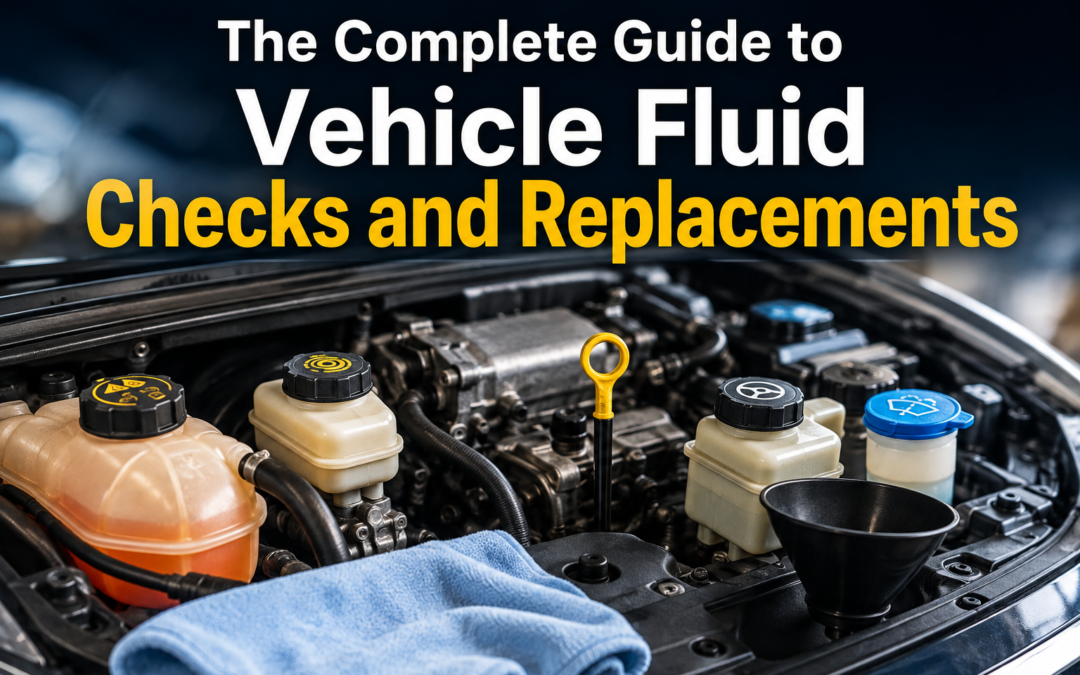
Vehicle fluids are essential to the health and performance of your car. They lubricate moving parts, regulate engine temperature, support braking and steering systems, and help protect critical components from premature wear. Without regular vehicle fluid checks and replacements, these systems can become less efficient, increasing the risk of breakdowns and costly repairs.
Many fluid-related problems develop gradually and don’t always produce immediate warning signs. A slow leak, contaminated fluid, or low fluid level can quietly damage major components long before you notice a change in performance. Routine inspections help identify these issues early, allowing you to address them before they become more serious.
This guide covers everything you need to know about vehicle fluid checks and replacements, including the purpose of each essential fluid, when it should be checked or replaced, common warning signs to watch for, and simple maintenance practices that can help keep your vehicle running safely and efficiently.
Why Vehicle Fluid Checks Matter
Every major system in your vehicle relies on one or more fluids to function properly. Without clean fluids at the correct levels, components experience increased friction, excessive heat, and accelerated wear. Over time, this can lead to reduced performance, costly repairs, or even complete component failure.
Routine vehicle fluid checks and replacements help:
- Reduce wear on engine and drivetrain components
- Improve fuel efficiency
- Maintain safe braking performance
- Prevent overheating
- Support smoother steering and gear changes
- Extend the lifespan of major vehicle systems
Many fluid-related problems develop gradually, making them easy to overlook. A slow coolant leak, aging brake fluid, or contaminated transmission fluid may not cause immediate issues, but they can eventually affect your vehicle’s reliability and safety.
Scheduling regular auto maintenance appointments allows technicians to inspect fluid levels, identify leaks, and recommend replacements before minor concerns become expensive repairs.
If you’re building a preventive maintenance routine, our guide on The Ultimate Vehicle Maintenance Checklist for Every Season explains how fluid inspections fit into year-round vehicle care.
The Essential Vehicle Fluids Every Driver Should Know
Modern vehicles rely on several different fluids, each serving a specific purpose. Understanding what these fluids do makes it easier to recognize when maintenance is needed.
Engine Oil
Engine oil lubricates moving engine components, reducing friction and helping control operating temperatures. It also carries away contaminants and helps protect internal parts from premature wear.
Over time, engine oil breaks down and becomes less effective, making regular oil changes one of the most important maintenance services your vehicle needs.
Coolant
Coolant, also known as antifreeze, regulates engine temperature by absorbing and dissipating heat. It helps prevent the engine from overheating during hot weather while also protecting against corrosion within the cooling system.
Low or contaminated coolant can increase the risk of overheating and engine damage.
Brake Fluid
Brake fluid transfers force from the brake pedal to the braking system, allowing your vehicle to slow down safely.
Because brake fluid absorbs moisture over time, it gradually loses effectiveness. Replacing it at the recommended intervals helps maintain responsive braking performance and protects brake system components.
Transmission Fluid
Transmission fluid lubricates internal transmission components, provides hydraulic pressure for gear changes, and helps keep operating temperatures under control.
Dirty or low transmission fluid can contribute to rough shifting, slipping gears, overheating, and premature transmission wear. Our guide on The Complete Guide to Transmission Repair: Causes, Signs, and Solutions explains how proper maintenance helps reduce the need for major transmission repairs.
Power Steering Fluid
In vehicles equipped with hydraulic power steering, power steering fluid helps reduce the effort required to turn the steering wheel while protecting steering components from excessive wear.
If fluid levels become low, steering may feel stiff, noisy, or less responsive.
Windshield Washer Fluid
Although it doesn’t affect mechanical performance, windshield washer fluid plays an important role in driver visibility. It helps remove dirt, road grime, bugs, and other debris from the windshield, making it easier to see in changing weather and road conditions.
Keeping the reservoir full is a simple maintenance task that improves safety throughout the year.
Each of these fluids contributes to your vehicle’s overall reliability and performance. Knowing their purpose is the first step toward recognizing when service is needed. In the next section, we’ll look at how often these fluids should be checked or replaced and the warning signs that indicate it’s time for professional attention.
When Should Each Vehicle Fluid Be Checked or Replaced?
There isn’t a single maintenance schedule that applies to every vehicle. Replacement intervals vary based on your vehicle’s make and model, driving habits, and manufacturer recommendations. However, performing regular vehicle fluid checks and replacements helps identify potential issues before they lead to expensive repairs.
Engine Oil
Engine oil should be checked regularly and replaced according to your manufacturer’s recommended service interval.
Signs it may need replacing include:
- Dark or dirty oil
- Engine knocking or ticking noises
- Oil warning light
- Reduced engine performance
Fresh engine oil keeps internal components properly lubricated and helps extend engine life.
Coolant
Coolant should be inspected periodically to ensure it’s at the proper level and free from contamination.
Common signs that coolant service may be needed include:
- Rising engine temperature
- Low coolant level
- Sweet smell from the engine compartment
- Visible coolant leaks
Ignoring coolant issues can lead to overheating and costly engine damage.
Brake Fluid
Brake fluid absorbs moisture over time, reducing its effectiveness and potentially affecting braking performance.
Signs your brake fluid may need replacement include:
- Soft or spongy brake pedal
- Brake warning light
- Reduced braking performance
- Dark or dirty brake fluid
Routine brake fluid replacement helps maintain safe, responsive braking.
Transmission Fluid
Transmission fluid should be inspected during routine maintenance and replaced according to the manufacturer’s recommendations.
Watch for warning signs such as:
- Delayed or rough shifting
- Slipping gears
- Transmission fluid leaks
- Burning smell
Low or contaminated transmission fluid can increase wear on internal components and eventually lead to major repairs.
Power Steering Fluid
Power steering fluid should remain clean and at the proper level to ensure smooth steering performance.
You may need service if you notice:
- Difficulty turning the steering wheel
- Whining noises while steering
- Low fluid level
- Visible leaks around steering components
Addressing these issues early can help prevent damage to the steering system.
Windshield Washer Fluid
Unlike other vehicle fluids, windshield washer fluid doesn’t have a replacement interval. Instead, simply refill the reservoir whenever the level becomes low.
Keeping plenty of washer fluid available helps maintain clear visibility during rain, dusty conditions, and long highway drives.
Common Signs Your Vehicle Needs a Fluid Replacement
Many fluid-related problems develop gradually, making it important to recognize the early warning signs. Addressing these symptoms promptly can reduce the risk of larger mechanical issues and help keep your vehicle performing reliably.
Dashboard Warning Lights
Modern vehicles monitor several fluid-related systems. Warning lights for engine oil, coolant temperature, or brakes should never be ignored.
If a warning light appears, schedule an inspection as soon as possible. Our article on Top Signs Your Car Needs Immediate Repair (Don’t Ignore These Warning Signs) explains why prompt diagnosis can help prevent more extensive damage.
Fluid Leaks
Finding fluid beneath your vehicle is often one of the clearest signs that service is needed.
Different fluids have distinct colors and characteristics:
- Amber or dark brown: Engine oil
- Green, orange, or pink: Coolant
- Red or reddish-brown: Transmission fluid
- Clear to light amber: Brake fluid
Even small leaks should be inspected before they worsen.
Burning Smells
A burning odor may indicate overheated engine oil or transmission fluid. Continued driving without addressing the cause can increase wear on critical components and lead to more expensive repairs.
Poor Braking Performance
If your brake pedal feels soft or your stopping distance increases, contaminated or low brake fluid could be affecting the braking system.
Brake issues should always be inspected promptly to help maintain safe driving conditions.
Hard Steering
If turning the steering wheel suddenly requires more effort or produces whining noises, low or deteriorated power steering fluid may be the cause.
Prompt service can restore steering performance and help prevent damage to the steering system.
Overheating Engine
An engine that frequently runs hot may have low coolant levels, contaminated coolant, or a leak within the cooling system.
Continuing to drive an overheating vehicle can result in severe engine damage. If your temperature gauge begins climbing or warning lights appear, have the cooling system inspected immediately.
Recognizing these warning signs and staying current with vehicle fluid checks and replacements helps improve your vehicle’s reliability while reducing the likelihood of unexpected breakdowns and costly repairs.
How to Check Your Vehicle’s Fluids
While some maintenance tasks should be left to trained technicians, many fluid checks can be performed at home in a few minutes, using your vehicle owner’s manual. Regular inspections help you spot leaks, low fluid levels, or contamination before they lead to more serious problems.
Tip: Always park your vehicle on a level surface and allow the engine to cool before checking fluids unless your owner’s manual instructs otherwise.
Checking Engine Oil
Engine oil is one of the easiest fluids to inspect.
To check it:
- Turn off the engine and allow it to cool for a few minutes.
- Remove the dipstick and wipe it clean.
- Reinsert the dipstick fully, then remove it again.
- Check that the oil level falls between the minimum and maximum marks.
- Inspect the oil’s color and consistency.
If the oil appears excessively dirty or the level is low, schedule an oil change or inspection.
Checking Coolant
Most vehicles have a translucent coolant reservoir with minimum and maximum level markings.
When checking coolant:
- Never remove the radiator cap while the engine is hot.
- Verify the coolant level is within the recommended range.
- Look for discoloration or debris.
- Inspect hoses and the reservoir for leaks.
Low coolant levels may indicate a leak that should be repaired rather than simply topped off repeatedly.
Checking Brake Fluid
Brake fluid is stored in a reservoir near the master cylinder.
Inspect:
- Fluid level
- Fluid color
- Reservoir condition
If the fluid appears dark or the level continues to drop, have your braking system inspected. Low brake fluid can indicate worn brake components or a leak that requires immediate attention.
Checking Transmission Fluid
Some vehicles include a transmission dipstick, while many newer models require professional service to inspect transmission fluid.
If your vehicle allows you to check it:
- Follow the manufacturer’s instructions.
- Verify the fluid level.
- Check for a bright red or pink color.
- Avoid fluid with a burnt smell or dark appearance.
If shifting becomes rough or delayed, don’t rely on adding fluid alone. Professional diagnostics may be needed to identify the underlying issue.
Checking Power Steering Fluid
For vehicles equipped with hydraulic power steering:
- Locate the power steering fluid reservoir.
- Check that the fluid is within the recommended range.
- Look for discoloration or contamination.
- Inspect nearby hoses for leaks.
If steering becomes stiff or noisy, schedule auto repair before additional damage occurs.
Checking Windshield Washer Fluid
Windshield washer fluid is the simplest fluid to maintain.
Inspect the reservoir regularly and refill it whenever the level is low. Using washer fluid instead of plain water helps improve cleaning performance and provides better protection during changing weather conditions.
Common Mistakes Drivers Make With Vehicle Fluids
Even drivers who check their fluids regularly can make mistakes that affect vehicle performance. Avoiding these common errors can help reduce repair costs and extend the life of major vehicle systems.
Ignoring Small Leaks
A few drops of fluid under your vehicle may not seem serious, but small leaks often become larger over time.
Addressing leaks early can help prevent:
- Engine overheating
- Transmission damage
- Brake performance issues
- Steering system wear
Mixing Different Fluid Types
Not all automotive fluids are interchangeable.
Using the wrong engine oil viscosity, coolant formulation, or transmission fluid can reduce performance and, in some cases, damage critical components.
Always follow your manufacturer’s specifications or consult a qualified technician before adding or replacing fluids.
Waiting Too Long Between Fluid Changes
Fluids naturally degrade with age, heat, and everyday driving. Waiting too long between replacements reduces their ability to lubricate, cool, and protect vehicle components.
Following the recommended maintenance schedule helps keep every system operating efficiently.
Topping Off Instead of Fixing the Problem
Adding fluid repeatedly without identifying why the level keeps dropping only masks the underlying issue.
If you frequently need to add engine oil, coolant, brake fluid, or transmission fluid, schedule an inspection to locate the source of the leak or excessive fluid consumption.
Skipping Routine Maintenance
Routine auto maintenance gives technicians the opportunity to inspect all major vehicle fluids, identify developing problems, and recommend service before more expensive repairs become necessary.
Preventive maintenance also saves money over time. Our article on 7 Ways to Save Money on Car Care Without Compromising Quality explains how staying ahead of routine maintenance can help reduce long-term ownership costs.
Making vehicle fluid checks and replacements part of your regular maintenance routine helps protect your engine, transmission, brakes, steering system, and cooling system, allowing your vehicle to perform safely and reliably for years to come.
Vehicle Fluid Maintenance Checklist
Following a regular maintenance schedule helps ensure every major system in your vehicle has the fluids it needs to operate safely and efficiently. Use this checklist as a general guide, but always refer to your owner’s manual for the recommended service intervals for your specific vehicle.
| Vehicle Fluid | Check Frequency | Replace or Service |
| Engine Oil | Monthly | Follow manufacturer-recommended oil change intervals |
| Coolant | Monthly | According to manufacturer recommendations |
| Brake Fluid | During routine service | Typically every 2–3 years or as recommended |
| Transmission Fluid | During routine service | Follow manufacturer guidelines |
| Power Steering Fluid | Monthly | As needed or per manufacturer recommendations |
| Windshield Washer Fluid | Monthly | Refill whenever the level is low |
Keep Your Vehicle Running at Its Best
Routine vehicle fluid checks and replacements are a simple yet essential part of preventive maintenance. Clean fluids at the proper levels help protect your engine, transmission, brakes, steering system, and cooling system, reducing wear and improving overall vehicle performance.
At Advanced Auto Care & Smog, we provide:
- Auto Maintenance
- Auto Repair
- Smog Check
- Auto Tires
- Vehicle Alignment
- CAP Program
- Car Coupons
- Clean Truck Check
Our team helps Ventura drivers keep their vehicles operating safely and efficiently. Whether it’s time for an oil change, coolant service, brake fluid replacement, or a complete vehicle inspection, our experienced technicians are here to help.
Schedule your next maintenance appointment with Advanced Auto Care & Smog today and keep your vehicle performing at its best with regular fluid checks and replacements.
Frequently Asked Questions
1. Why are vehicle fluid checks and replacements important?
They help protect major vehicle systems from excessive wear, improve performance, reduce the risk of breakdowns, and extend the lifespan of your vehicle.
2. How often should I check my vehicle’s fluids?
It’s a good idea to check essential fluids such as engine oil, coolant, power steering fluid, and windshield washer fluid at least once a month. Other fluids should be inspected during routine maintenance.
3. Which vehicle fluid needs to be replaced most often?
Engine oil typically requires replacement more frequently than other vehicle fluids, but the exact interval depends on your vehicle and driving conditions.
4. Can low vehicle fluids damage my car?
Yes. Low or contaminated fluids can lead to overheating, poor braking performance, transmission problems, steering issues, and premature component wear.
5. What are the signs of low transmission fluid?
Common signs include delayed shifting, slipping gears, unusual noises, transmission fluid leaks, and a burning smell.
6. Can I check vehicle fluids myself?
Yes. Many fluids, including engine oil, coolant, power steering fluid, and windshield washer fluid, can be checked at home. Some vehicles, however, require professional inspection for transmission fluid.
7. Is it okay to top off fluids instead of replacing them?
Topping off a fluid may temporarily restore the correct level, but it doesn’t address contaminated fluid or the cause of repeated fluid loss. If levels continue to drop, your vehicle should be inspected.
8. What happens if I use the wrong type of vehicle fluid?
Using the incorrect fluid can reduce performance and may damage vehicle components. Always use the fluid specified by your vehicle manufacturer.
9. Can regular fluid maintenance help prevent expensive repairs?
Yes. Routine vehicle fluid checks and replacements help identify leaks, contamination, and low fluid levels before they cause significant damage, reducing the likelihood of costly repairs.
10. Where can I get professional vehicle fluid checks and replacements in Ventura?
Advanced Auto Care & Smog provides professional fluid inspections, replacements, and maintenance services to help keep your vehicle running safely and efficiently.