
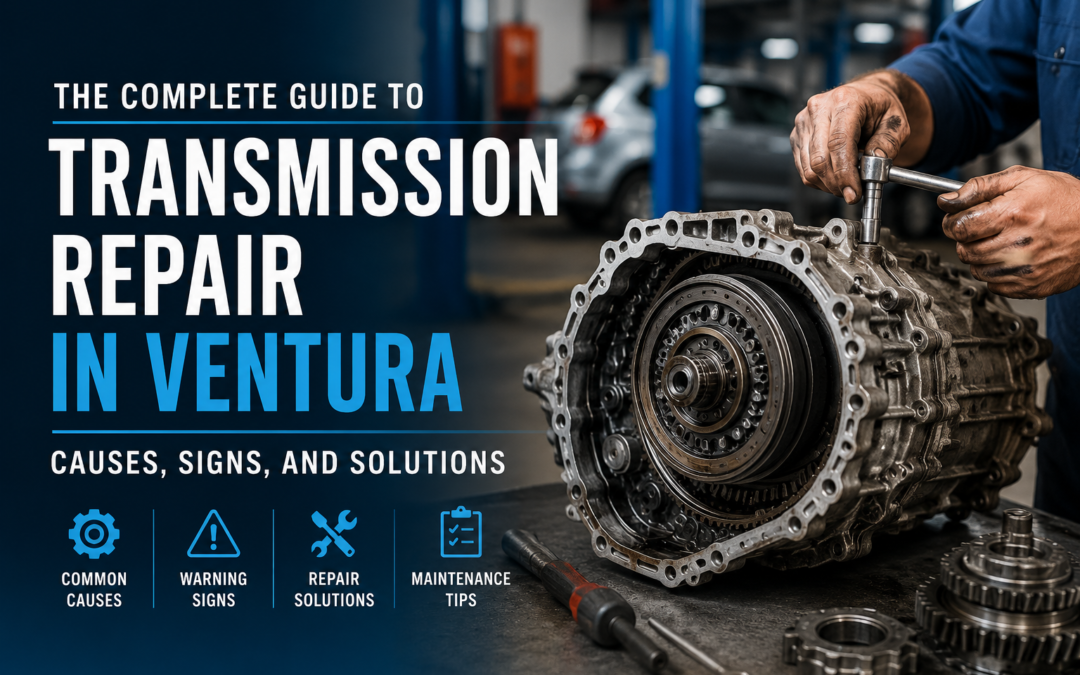
Modern vehicles are built to last, but major systems like the transmission still require regular care to perform reliably. Delaying transmission repair in Ventura or ignoring early warning signs can allow minor issues to develop into costly repairs that affect your vehicle’s safety and performance.
According to the J.D. Power 2025 U.S. Vehicle Dependability Study, the automotive industry averaged 202 problems per 100 vehicles, highlighting the importance of addressing mechanical issues before they become more serious.
This blog covers everything you need to know about transmission repair, including how your transmission works, common causes of transmission problems, warning signs to watch for, available repair solutions, and practical maintenance tips to help extend the life of your vehicle.
What Does Your Transmission Do?
Your transmission is one of the most important components of your vehicle’s drivetrain. Its primary role is to transfer power generated by the engine to the wheels while adjusting gear ratios to match your driving speed and conditions.
Every time you accelerate, slow down, climb a hill, or drive at highway speeds, your transmission works continuously to ensure your engine operates efficiently. A properly functioning transmission helps deliver:
- Smooth gear changes
- Better acceleration
- Improved fuel efficiency
- Reduced engine strain
- A more comfortable driving experience
Because the transmission consists of many interconnected mechanical and electronic components, even a relatively minor issue can affect overall vehicle performance. That’s why scheduling transmission repair in Ventura at the first sign of trouble is often the most cost-effective solution.
Automatic vs. Manual Transmissions
Most modern vehicles are equipped with either an automatic or manual transmission. While both serve the same purpose, they operate differently and require different driving techniques.
| Automatic Transmission | Manual Transmission |
| Changes gears automatically. | Driver manually shifts gears using a clutch pedal and gear lever. |
| Easier to drive in heavy traffic. | Offers greater control over gear selection. |
| Most common in modern passenger vehicles. | Often preferred by driving enthusiasts and some commercial applications. |
| Uses hydraulic systems and electronic controls to manage shifting. | Relies more on mechanical components and driver input. |
Regardless of the transmission type, regular maintenance is essential. Routine auto maintenance services in Venture, CA, such as fluid inspections and scheduled servicing, help keep the transmission operating efficiently and reduce unnecessary wear.
Why Transmission Repair in Ventura Shouldn’t Be Delayed
Many drivers ignore early transmission problems because the vehicle is still drivable. Unfortunately, transmission issues tend to worsen over time, and delaying repairs often leads to more extensive damage.
For example, a small transmission fluid leak may initially seem harmless. However, as fluid levels continue to drop, internal components receive less lubrication, generating additional heat and friction. Over time, this can damage gears, bearings, seals, and other critical parts.
Similarly, rough or delayed shifting may indicate a relatively simple problem, such as contaminated transmission fluid or a faulty sensor. Addressing the issue early is usually less expensive than waiting until multiple internal components are affected.
Prompt transmission repair offers several important benefits:
- Prevents additional damage to transmission components
- Improves vehicle safety and reliability
- Helps maintain fuel efficiency
- Reduces the likelihood of unexpected breakdowns
- May eliminate the need for a complete transmission replacement
Ignoring warning signs can also leave you stranded unexpectedly. If your vehicle has started making unusual noises, displaying warning lights, or behaving differently during acceleration, don’t assume the problem will resolve itself. Our article on Top Signs Your Car Needs Immediate Repair (Don’t Ignore These Warning Signs) explains why early diagnosis is one of the best ways to avoid larger repair bills.
Drivers in Ventura often depend on their vehicles for commuting, errands, and longer trips throughout Ventura County. Scheduling transmission repair Ventura services as soon as symptoms appear helps keep your vehicle dependable while minimizing the risk of costly failures.
Like many major vehicle systems, the transmission benefits from preventive care. Regular inspections, fluid checks, and routine maintenance allow technicians to identify developing problems before they affect overall performance. Investing in timely repairs today can help extend the life of your transmission and improve your driving experience for years to come.
Common Signs You Need Transmission Repair
Transmission problems rarely appear all at once. In many cases, your vehicle will show subtle warning signs before the issue becomes severe. Recognizing these symptoms early and scheduling transmission repair can help prevent additional damage, improve vehicle performance, and reduce repair costs.
Delayed or Rough Gear Shifting
One of the earliest signs of a transmission problem is delayed or rough shifting. Your vehicle may hesitate before changing gears, shift unexpectedly, or feel jerky while accelerating. These symptoms can be caused by:
- Low or contaminated transmission fluid
- Worn transmission components
- Faulty shift solenoids
- Internal transmission wear
Although the vehicle may still be drivable, delaying transmission repair can place additional strain on internal components and increase the likelihood of more extensive repairs.
Slipping Gears
A healthy transmission should remain in the correct gear while driving. If your vehicle unexpectedly changes gears or struggles to stay in gear, the transmission may be slipping. Common signs include:
- Sudden changes in engine RPM
- Poor acceleration
- Difficulty maintaining speed
- Delayed response when pressing the accelerator
Gear slipping affects both performance and safety, making it important to have the transmission inspected as soon as possible.
Grinding, Whining, or Humming Noises
Unusual noises often indicate that internal transmission components are wearing or not receiving adequate lubrication. Listen for sounds such as:
- Grinding during gear changes
- Whining while accelerating
- Humming at certain speeds
- Clunking when shifting into drive or reverse
While several vehicle systems can produce similar noises, professional diagnostics can determine whether the transmission is the source of the problem.
Transmission Fluid Leaks
Transmission fluid is essential for lubricating, cooling, and protecting internal components. If you notice red or reddish-brown fluid underneath your vehicle, don’t ignore it. A leak may result from:
- Damaged seals
- Worn gaskets
- Loose transmission pan bolts
- Cracked transmission lines
Even a slow leak can reduce fluid levels over time, increasing friction and heat inside the transmission. Addressing leaks early is often much less expensive than repairing damage caused by low fluid levels.
Burning Smell
A burning odor while driving may indicate that the transmission is overheating. This often happens when transmission fluid becomes old, contaminated, or insufficient to properly lubricate internal components.
Ignoring this warning sign can accelerate wear and eventually lead to transmission failure.
Routine auto maintenance helps keep transmission fluid in good condition and allows technicians to identify potential issues before they become more serious.
Check Engine Light
Many drivers associate the check engine light only with engine problems, but it can also indicate transmission-related issues.
Modern vehicles use sensors to monitor transmission performance. If those sensors detect irregular shifting or other abnormalities, they may trigger the check engine light.
Rather than waiting for additional symptoms to appear, schedule an inspection promptly. Our article on 5 Signs Your Vehicle Needs Immediate Auto Repairs explains why early diagnosis can help prevent larger repair bills.
Poor Acceleration
If your engine revs normally but the vehicle accelerates slowly, the transmission may not be transferring power efficiently to the wheels. Possible causes include:
- Internal transmission wear
- Slipping gears
- Low transmission fluid
- Torque converter problems
Reduced acceleration affects everyday driving and can make merging onto highways or climbing hills more difficult.
Vibrations While Driving
Vibrations during acceleration or while changing gears may indicate transmission problems, especially if they’re accompanied by delayed shifting or unusual noises.
Because vibrations can also be caused by suspension or alignment issues, it’s important to have the entire drivetrain inspected. If your vehicle also pulls to one side or experiences uneven tire wear, our blog on 10 Signs Your Car Needs a Wheel Alignment Right Now explains how alignment problems can affect vehicle performance.
What Causes Transmission Problems?
While normal wear contributes to transmission issues over time, many problems develop because of neglected maintenance or driving habits. Understanding these causes can help reduce the need for future transmission repair.
Low or Dirty Transmission Fluid
Transmission fluid lubricates moving components, controls hydraulic pressure, and helps regulate operating temperature.
Over time, the fluid can become contaminated with debris or lose its protective properties. Low or dirty fluid increases friction, leading to overheating and premature wear.
Following your manufacturer’s recommended service schedule is one of the best ways to protect your transmission.
Overheating
Heat is one of the leading causes of transmission damage. Towing heavy loads, stop-and-go traffic, aggressive driving, and low fluid levels can all increase operating temperatures.
Excessive heat accelerates fluid breakdown and places additional stress on internal seals, clutches, and gears.
Worn Internal Components
Like any mechanical system, transmission parts gradually wear with age and mileage. Components that commonly wear include:
- Clutch packs
- Bearings
- Gears
- Bushings
- Seals
Routine inspections help identify early wear before complete component failure occurs.
Faulty Solenoids or Sensors
Modern automatic transmissions rely on electronic solenoids and sensors to control gear changes.
When these components fail, they may cause:
- Delayed shifting
- Incorrect gear selection
- Check engine lights
- Reduced transmission performance
Many electronic transmission issues can be diagnosed quickly using professional diagnostic equipment.
Lack of Routine Maintenance
Skipping routine service is one of the most preventable causes of transmission problems. Regular auto maintenance helps technicians inspect transmission fluid, identify leaks, monitor component wear, and recommend service before minor issues become major repairs.
If you’re looking for additional ways to reduce repair costs through preventive maintenance, our guide on The Ultimate Vehicle Maintenance Checklist for Every Season offers practical tips to help keep every major vehicle system, including the transmission, operating efficiently.
How Transmission Repair Is Diagnosed
When transmission problems develop, identifying the exact cause is the first step toward an effective repair. Because many transmission symptoms can resemble engine, suspension, or drivetrain issues, professional diagnostics help eliminate guesswork and ensure the correct repairs are performed.
Computer Diagnostics
Most modern vehicles use onboard computers to monitor transmission performance. Technicians connect a diagnostic scanner to retrieve fault codes that may indicate problems with:
- Shift solenoids
- Speed sensors
- Transmission control modules
- Electronic communication systems
While fault codes provide valuable information, they are only one part of the diagnostic process. Additional inspections are often needed to confirm the root cause.
Road Test
A road test allows technicians to evaluate how the transmission performs under real driving conditions. During the test, they look for:
- Delayed gear engagement
- Rough or erratic shifting
- Gear slipping
- Vibrations
- Unusual noises
- Acceleration concerns
Observing these symptoms firsthand helps determine when the problem occurs and which components may be affected.
Transmission Fluid Inspection
Transmission fluid offers important clues about the condition of the transmission. Technicians typically inspect:
- Fluid level
- Fluid color
- Burnt odor
- Metal particles or debris
- Signs of contamination
Healthy transmission fluid is generally bright red and free of debris. Dark, burnt-smelling fluid or visible metal particles may indicate excessive internal wear that requires further inspection.
Visual Inspection
A thorough visual inspection helps identify external issues that may contribute to transmission problems. This inspection may include checking:
- Transmission housing
- Seals and gaskets
- Cooling lines
- Electrical connectors
- Mounting components
- Visible fluid leaks
Combining diagnostic testing with a physical inspection provides a more accurate understanding of the transmission’s condition and helps technicians recommend the most appropriate transmission repair solution.
Common Transmission Repair Solutions
Not every transmission problem requires a complete replacement. In many cases, early diagnosis allows technicians to perform targeted repairs that restore performance while reducing overall repair costs.
The right solution depends on the severity of the damage, the condition of the transmission, and the age of the vehicle.
Transmission Fluid Service
If the problem is caused by old or contaminated fluid, replacing the transmission fluid and filter may restore smooth operation.
A transmission fluid service can help:
- Improve shifting performance
- Reduce operating temperatures
- Minimize internal wear
- Extend transmission life
Following the recommended maintenance schedule is one of the easiest ways to reduce the need for major transmission repair later.
Replacing Seals and Gaskets
Transmission fluid leaks are often caused by worn seals or damaged gaskets.
Replacing these components early helps:
- Prevent fluid loss
- Protect internal components
- Reduce overheating
- Avoid more extensive repairs
Repairing a small leak promptly is generally much less expensive than repairing damage caused by low transmission fluid.
Solenoid Replacement
Shift solenoids regulate the flow of transmission fluid during gear changes. When one fails, the transmission may hesitate, shift harshly, or become stuck in a particular gear.
Replacing a faulty solenoid often restores normal shifting without requiring major transmission work.
Clutch Repairs
For manual transmissions, worn clutch components can affect shifting performance and power transfer.
Depending on the inspection results, technicians may recommend replacing:
- Clutch disc
- Pressure plate
- Release bearing
- Flywheel components
Addressing clutch wear early helps prevent additional damage to surrounding drivetrain components.
Torque Converter Repairs
Automatic transmissions rely on a torque converter to transfer engine power to the transmission.
If the torque converter begins to fail, drivers may notice:
- Shuddering during acceleration
- Delayed engagement
- Slipping
- Poor fuel efficiency
Repairing or replacing the torque converter can often restore smooth performance without replacing the entire transmission.
Transmission Rebuild
If several internal components have worn but the transmission housing remains in good condition, a rebuild may be the most practical option.
A rebuild involves:
- Disassembling the transmission
- Inspecting internal components
- Replacing worn or damaged parts
- Reassembling and testing the transmission
This option restores many internal components while retaining the original transmission housing.
Transmission Replacement
When damage is severe or a rebuild is no longer practical, replacing the transmission may be the best long-term solution.
Although replacement represents a larger investment, it may provide greater reliability for vehicles with extensive internal damage.
Transmission Repair vs. Transmission Replacement
Understanding the difference between repairing and replacing a transmission helps vehicle owners make informed decisions.
| Option | When It’s Recommended |
| Transmission Fluid Service | Fluid is old, contaminated, or low. |
| Seal or Gasket Replacement | Minor transmission fluid leaks are present. |
| Solenoid Repair | Electronic shifting problems are affecting performance. |
| Transmission Rebuild | Multiple internal components are worn, but the transmission housing is still serviceable. |
| Transmission Replacement | Internal damage is extensive, or rebuilding is no longer cost-effective. |
An experienced auto body shop in Ventura will evaluate your vehicle’s condition, explain the available options, and recommend the most appropriate repair based on the extent of the damage, your driving needs, and the long-term value of the repair.
How to Prevent Transmission Problems
While some transmission issues develop as components naturally wear over time, many can be avoided with routine maintenance and good driving habits. A proactive approach not only improves vehicle performance but can also reduce the need for major transmission repair.
Check Transmission Fluid Regularly
Transmission fluid lubricates internal components, regulates temperature, and supports smooth gear changes. Low or contaminated fluid increases friction and heat, accelerating wear on the transmission.
Have your transmission fluid inspected at the intervals recommended by your vehicle manufacturer, and address any leaks as soon as they’re discovered.
Follow Your Recommended Maintenance Schedule
Routine maintenance is one of the best ways to protect your transmission. During scheduled auto maintenance appointments, technicians can inspect fluid condition, identify leaks, and detect early signs of wear before they become more expensive problems.
If you’re unsure what maintenance your vehicle needs throughout the year, our guide on The Ultimate Vehicle Maintenance Checklist for Every Season provides a practical schedule to help keep your vehicle in top condition.
Avoid Aggressive Driving Habits
Your driving style has a direct impact on transmission health. To reduce unnecessary wear:
- Accelerate smoothly.
- Come to complete stops before shifting between drive and reverse.
- Avoid rapid gear changes.
- Don’t exceed your vehicle’s towing capacity.
- Allow the transmission to warm up before demanding heavy performance in colder weather.
These habits reduce stress on internal components and help extend the life of your transmission.
Address Warning Signs Early
Small transmission problems rarely fix themselves. Delayed shifting, unusual noises, fluid leaks, or warning lights should always be inspected promptly.
Early diagnosis often results in simpler, less expensive repairs. If your vehicle is showing multiple symptoms, our article on Top Signs Your Car Needs Immediate Repair (Don’t Ignore These Warning Signs) explains why acting quickly can help prevent larger mechanical issues.
Schedule Routine Inspections
Even if your vehicle seems to be running normally, periodic inspections can identify developing transmission problems before they affect drivability.
Professional inspections can uncover:
- Minor fluid leaks
- Worn seals
- Early component wear
- Electronic faults
- Transmission software issues
Routine inspections provide peace of mind and help keep your vehicle operating reliably.
Quick Transmission Care Checklist
Use this simple checklist to help keep your transmission in good condition.
| Do | Don’t |
| Check transmission fluid regularly. | Ignore transmission fluid leaks. |
| Follow the recommended maintenance schedule. | Continue driving with slipping or delayed gear shifts. |
| Schedule inspections when warning lights appear. | Ignore unusual noises or vibrations. |
| Drive smoothly and avoid aggressive acceleration. | Exceed your vehicle’s towing capacity. |
| Address small issues promptly. | Delay transmission repair until the problem becomes severe. |
Reliable Transmission Repair Starts With Early Action
Transmission problems rarely improve without attention, and delaying repairs can lead to more extensive damage and higher repair costs. Recognizing the warning signs early, keeping up with routine maintenance, and addressing small issues promptly are the best ways to protect your vehicle and avoid unexpected breakdowns.
At Advanced Auto Care & Smog, we provide professional services to help keep your vehicle performing at its best, including:
- Auto Maintenance
- Auto Repair
- Smog Check
- Auto Tires
- Vehicle Alignment
- CAP Program
- Car Coupons
- Clean Truck Check
Our experienced technicians use thorough diagnostics to identify transmission issues accurately and recommend reliable, cost-effective repair solutions.
Request a quote from Advanced Auto Care & Smog today and keep your vehicle running smoothly for every mile ahead.
Frequently Asked Questions
1. What are the first signs you need transmission repair?
Common signs include delayed shifting, slipping gears, transmission fluid leaks, unusual noises, a burning smell, poor acceleration, and an illuminated check engine light.
2. Can low transmission fluid cause transmission problems?
Yes. Low or contaminated transmission fluid reduces lubrication and cooling, increasing friction and the risk of internal transmission damage.
3. How do I know if I need transmission repair or a replacement?
Minor issues such as leaks, faulty solenoids, or worn seals can often be repaired. A replacement may be recommended if the transmission has extensive internal damage or has reached the end of its service life.
4. Is it safe to drive with transmission problems?
It’s best to have the vehicle inspected as soon as symptoms appear. Continuing to drive with transmission issues can worsen the damage and increase repair costs.
5. How often should transmission fluid be changed?
Service intervals vary by manufacturer and vehicle type. Always follow your owner’s manual or ask your technician for the recommended schedule.
6. What causes a transmission to slip?
Low transmission fluid, worn clutch components, damaged gears, faulty solenoids, or internal wear are among the most common causes.
7. Can routine maintenance prevent transmission repair?
Routine maintenance can significantly reduce the risk of transmission problems by keeping the fluid clean, identifying leaks early, and detecting worn components before they fail.
8. How long does transmission repair usually take?
Repair time depends on the issue. Minor repairs may take a few hours, while complex repairs or a transmission rebuild can take several days.
9. Does the check engine light always mean there’s a transmission problem?
No. The check engine light can indicate a variety of engine or drivetrain issues. Professional diagnostics are needed to determine the exact cause.
10. Where can I get professional transmission repair in Ventura?
If you’re experiencing transmission problems, Advanced Auto Care & Smog offers professional transmission repair Ventura services, along with comprehensive diagnostics and maintenance to help keep your vehicle operating reliably.